Mouse Control in Fort Lauderdale
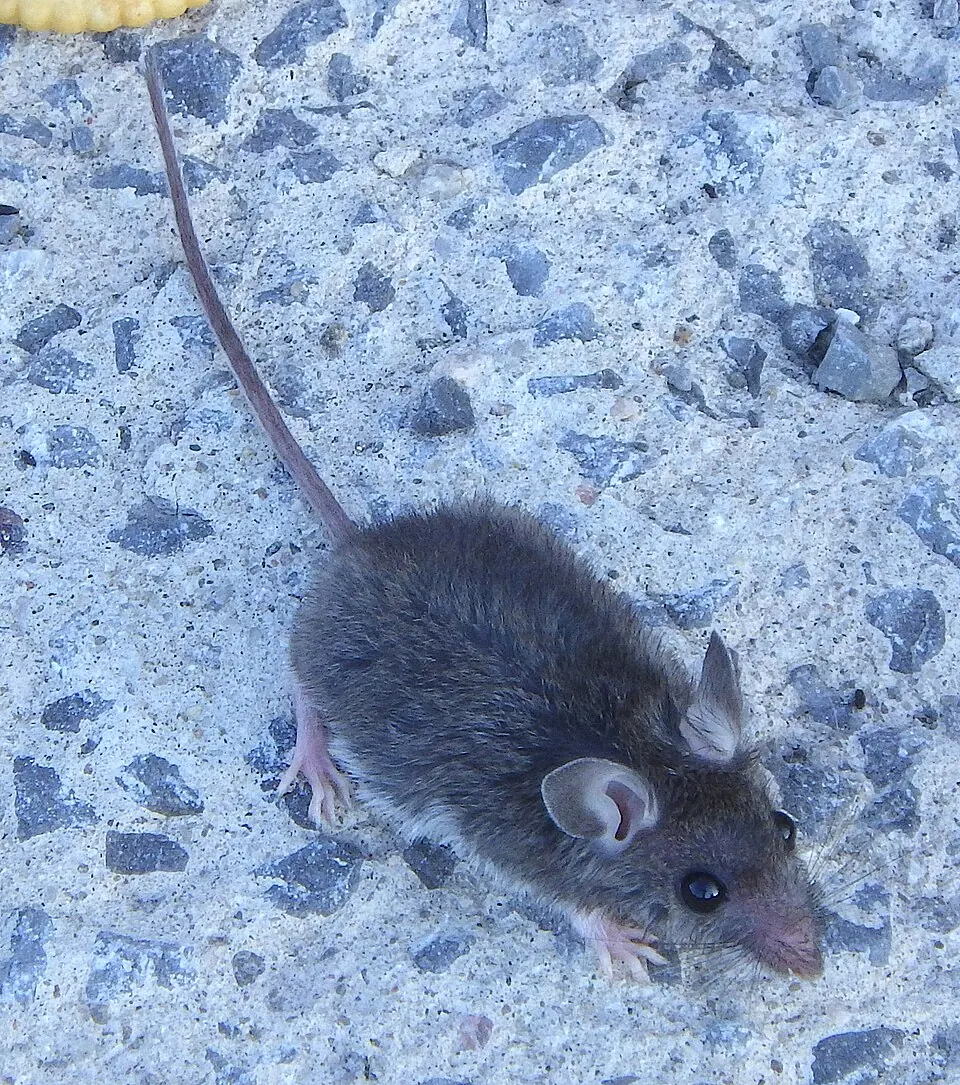
Mice make up a smaller share of calls here than roof rats, but they're common in condos, townhomes and older houses near downtown. A house mouse is small and gray-brown with big ears and a nearly hairless tail. You usually notice the droppings first: dark, pointed and tiny, along the back of a drawer or under the sink.
UF/IFAS puts the size problem plainly: mice can squeeze through cracks a quarter inch wide, and any place a pencil can be poked, a mouse can go. It also says house mice usually stay within 10 to 30 feet of their nest. That means the nest is close to where you find the droppings, often in a wall, a cabinet base or behind an appliance.
What people usually notice first:
- Small rod-shaped droppings in drawers, cabinets or along baseboards
- Chewed corners on cereal boxes, rice bags or pet food
- Shredded paper or fabric tucked behind an appliance
- A musky smell in a closet or under the kitchen sink
- Light scratching inside a wall at night
Where mice get into Fort Lauderdale homes
In single-family houses, the usual openings are the gap under the garage door, holes where plumbing and gas lines come through the wall, and the space around the AC line set. Concrete block homes, common in Oakland Park and across Broward, often have small gaps where the wall meets the slab or where a pipe was replaced.
In condos and apartments, mice move between units along plumbing chases and behind kitchen cabinets. Sealing your own unit helps, but if the building doesn't deal with the trash room and common areas, more will come. See condo and apartment rodent work.
- Garage door bottom seals that are torn or flattened
- Holes behind the stove, dishwasher and washing machine
- Gaps where pipes come up under sinks
- Weep holes and utility openings low on the outside wall
What a thorough mouse job includes
Mouse work is close-up work. The technician should open cabinets, pull the toe-kick panels if they come off, and look behind the fridge and washer. Ask for these:
- An inspection of the kitchen, laundry, garage and every spot with droppings
- Snap traps along walls and in dark spots, more of them than a rat job uses
- Sealing with materials mice can't chew: hardware cloth, metal plates, mortar, or packed metal mesh under sealant
- A check of the garage door seals and the outside wall at ground level
- Return visits until the traps stay empty
Noises in the ceiling after dark? Describe what you're hearing.
Your call goes to an independent local rodent control provider in Broward County. Same-day appointments are often available.
Step by step
Most mouse jobs follow this order:
- Find the droppings and the runways, then work out where the mice are entering
- Set traps close together along the walls. UF/IFAS notes mice are curious and usually approach traps the first night, and that more traps are needed for mice than for rats.
- Seal the openings found inside and outside
- Check the traps after a few days. If nothing is caught in the first few nights, UF/IFAS says the trap is in the wrong place, so it gets moved.
- Clean up droppings safely once activity stops
Why mice are a Fort Lauderdale condo problem
A lot of the city lives in shared buildings, from beach towers to garden apartments and long townhome rows. Mice in those buildings travel through pipe chases, electrical runs and trash rooms. One unit can be spotless and still get mice from the unit below. Year-round warmth doesn't help, since there's no cold snap that slows breeding. UF/IFAS says house mice mature in about six weeks and can have up to eight litters a year.
Cleaning up droppings safely
The CDC says to air out the space for 30 minutes first, wear rubber or plastic gloves, and spray droppings with a disinfectant or a bleach solution of 1 part bleach to 9 parts water. Let it soak for 5 minutes, then wipe up with paper towels and bag it. Don't sweep or vacuum droppings. If droppings are spread through a pantry or attic, see droppings cleanup and sanitizing.
Common questions
I've seen one mouse. Is that a problem?
Usually there are more. Mice breed quickly and stay hidden. One in daylight often means a nest nearby.
Do I have to leave while they treat?
No. Mouse work is mostly traps and sealing, so you can stay home.
Are glue boards a good idea?
UF/IFAS says glue boards are better suited for mice than rats. Many people prefer snap traps because they kill quickly. Ask the technician what they plan to use.
How do I tell mouse droppings from rat droppings?
UF/IFAS gives mouse droppings as about an eighth of an inch and rod-shaped. Roof rat droppings run up to half an inch. Rat vs mouse droppings has the full comparison.
Can mice climb to a high floor?
Yes. They travel inside walls, pipe chases and elevator shafts, and they arrive in boxes and deliveries.
Need mouse control in Broward?
Your call goes to an independent local rodent control provider in Broward County. Same-day appointments are often available.
Related reading
Areas served: Victoria Park, Las Olas, Rio Vista, Sailboat Bend, Tarpon River, Croissant Park, Harbor Beach, Coral Ridge, Imperial Point, Downtown & Flagler Village, Wilton Manors, Oakland Park, Plantation, Davie, Hollywood, Dania Beach, Pompano Beach, Lighthouse Point, Lauderdale-by-the-Sea, Coral Springs.