Rat Control in Fort Lauderdale, Florida
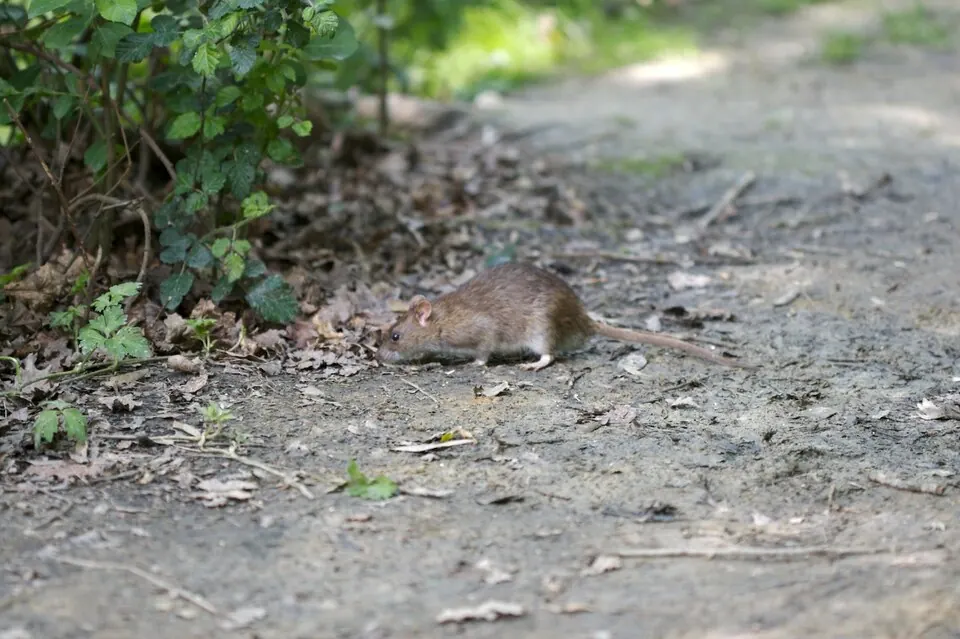
Fort Lauderdale has two kinds of rats around houses. Roof rats live up high and have their own page: roof rat control. This page is about the other one, the Norway rat. It's heavier, reddish brown, with a blunt muzzle, small ears and a tail about as long as its body. It lives on the ground and digs.
UF/IFAS describes Norway rats as burrowers that are common along coasts and canals, and says they range 100 to 150 feet from where they live to find food or water. In a city laced with canals, seawalls and the New River, that tells you where to look: along the water, under slabs and sheds, around dumpster pads and in thick ground cover next to the house.
What people usually notice first:
- Round burrow holes with smooth, packed edges along a slab, seawall or foundation
- Capsule-shaped droppings about three-quarters of an inch long
- A worn dirt path through the grass along a fence or wall
- Gnawed garbage bins, feed bags or pool equipment covers
Where Norway rats turn up around Fort Lauderdale
Waterfront yards are the classic spot. A seawall with soil washing out behind it, a dock with storage underneath, a pile of pavers or lumber by the canal: all of it is cover. Rats come up from the water's edge to whatever food the yard offers. Houses on the finger isles off Las Olas and the canals of Harbor Beach get these calls.
Away from the water, it's food and trash. Restaurant rows, apartment dumpsters and alleys behind shops draw Norway rats, and they spread into nearby yards. That side is covered under commercial rodent control and restaurant rodent control.
What a thorough rat job includes
Ground rats need a ground-level plan. A provider who only drops bait in the yard and leaves isn't doing the whole job. Expect these pieces:
- A walk of the yard, slab edge, seawall, dock and garage to find burrows and runways
- A look at what the rats are eating: trash, pet food, fallen fruit, bird seed
- Traps along walls and runways where rats travel
- Any bait in locked, anchored stations outside, never loose in a burrow
- Sealing gaps at the bottom of garage doors and around pipes with metal or concrete
- Closing burrows once activity stops. Rat burrow treatment covers this part.
Noises in the ceiling after dark? Describe what you're hearing.
Your call goes to an independent local rodent control provider in Broward County. Same-day appointments are often available.
Step by step
A typical Norway rat job here goes like this:
- The technician finds the burrows and runways and checks whether rats have reached the garage, house or crawl space
- Traps and, if part of the plan, locked bait stations go along the runways
- Food sources get pointed out so you can remove them
- Openings into the building get sealed
- Return visits check activity. Burrows get watched, then collapsed and filled when they go quiet.
Why Norway rats are harder to stop here
Water is everywhere. UF/IFAS says roof rats also burrow in canal banks and under sidewalks, so a waterfront yard can host both kinds near the ground. Seawalls lose fill behind them over time, which leaves voids rats move into. Neighbors share the same canal, so a rat colony under one dock feeds into the next yard.
Fort Lauderdale also has a lot of restaurants, marinas and fish-cleaning tables close to homes. Leftover bait, fish scraps and grease give rats steady food. Taking that away is half the job, and it usually involves the neighbors or the marina.
Things that help right away
Take away easy meals. Put garbage in bags inside the city cart and keep the lid shut. Feed pets indoors. Pick up fallen fruit and spilled seed. Move stacks of lumber, pavers and junk off the ground or out of the yard. Leave the burrows alone until the technician sees them, since open holes show how big the problem is. If you're not sure which rat you've got, the species guide has side-by-side differences.
Common questions
How do I tell a Norway rat from a roof rat?
Norway rats are chunkier with a blunt nose and a tail no longer than the body. Roof rats are slimmer with a pointed nose and a tail longer than the body. Burrows point to Norway rats. Attic noise points to roof rats.
Can rats swim up from the canal?
Norway rats swim well, and UF/IFAS calls roof rats good swimmers too. Canal banks and seawalls are prime habitat, which is one reason waterfront yards see more of them.
How fast do Norway rats multiply?
UF/IFAS says Norway rats have 8 to 12 young per litter and up to 7 litters a year, and reach maturity in 3 to 5 months.
Should I fill the burrows myself?
Wait until the technician has seen them. Filling active burrows just moves the rats a few feet. Burrows get closed once trapping shows they're empty.
Is bait safe with dogs in the yard?
Only in locked, tamper-resistant stations anchored in place. Tell the provider about every pet before anything goes out.
Need rat control in Broward?
Your call goes to an independent local rodent control provider in Broward County. Same-day appointments are often available.
Related reading
Areas served: Victoria Park, Las Olas, Rio Vista, Sailboat Bend, Tarpon River, Croissant Park, Harbor Beach, Coral Ridge, Imperial Point, Downtown & Flagler Village, Wilton Manors, Oakland Park, Plantation, Davie, Hollywood, Dania Beach, Pompano Beach, Lighthouse Point, Lauderdale-by-the-Sea, Coral Springs.